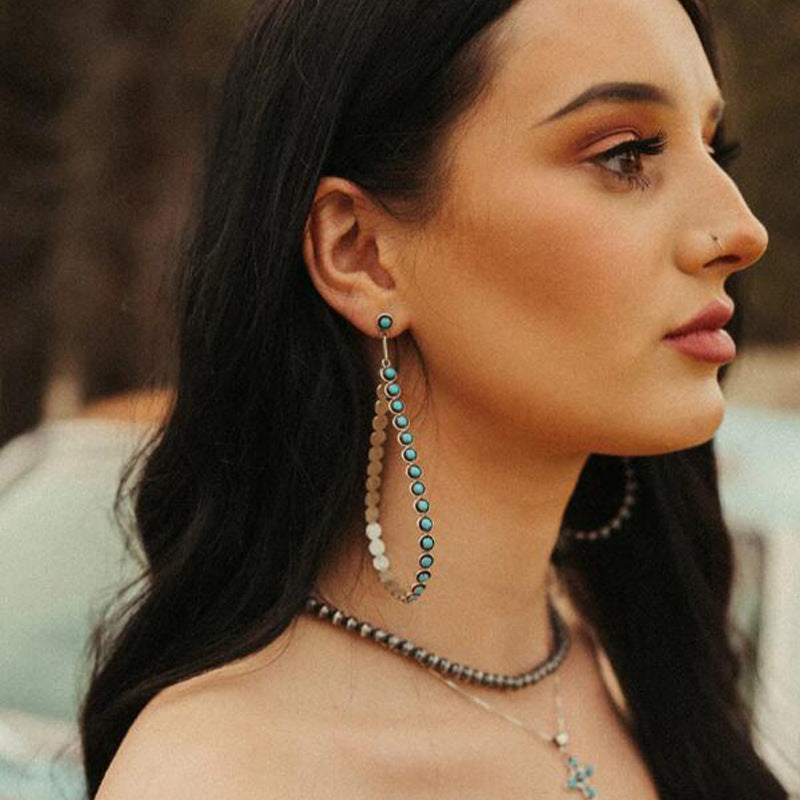
“Cowgirl turquoise jewelry” can describe a useful concert mood, but it cannot tell a wearer whether an earring is light enough, whether a backing is secure, whether a cross motif is personally welcome, or whether a turquoise-colored component is a documented material. What works is an outfit built from visible design, verified product facts, and a rehearsal. What does not work is treating a search label as a complete specification.
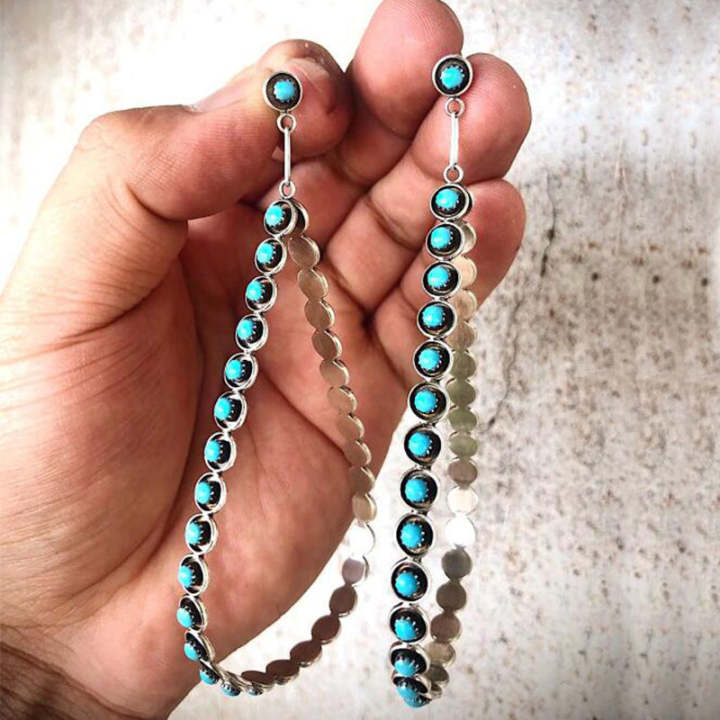
This guide compares the Turquoise Statement Cross Earrings and the Turquoise Western Statement Earrings. Their current titles, galleries, and listing text support analysis of color, cross shapes, Western-inspired styling, and face-level focal points. They do not independently prove natural turquoise, a particular metal, age, origin, maker, construction, handmade status, or cultural affiliation.
Quick Answer: What Works and What Does Not
| What works | What does not |
|---|---|
| One clearly chosen focal zone | Every accessory competing at full volume |
| An exact product and option record | Assuming a title covers every specification |
| Hair, hat, phone, jacket, and bag rehearsal | Judging comfort from a static photograph |
| Color repetition with space between accents | Trying to match every blue-green item exactly |
| Wearer-approved symbolism | Assigning meaning from the motif alone |
| Documented care and secure storage | Cleaning unknown materials by guesswork |
Use the Cowgirl Jewelry collection to shortlist by body location and visual role. Use the broader Western Jewelry collection to compare earrings with a necklace, bracelet, or ring before committing to a face-level statement.
What Works: A Two-Line Outfit Brief
Line one should describe the appearance: “Turquoise-colored earrings lead a dark denim look, with one smaller hand-level repeat.” Line two should describe the event: “The outfit must work with long hair, ear protection, a cross-body bag, a jacket, a phone ticket, and several hours of movement.” The second line is as important as the first.
This brief exposes conflicts early. A tall hat, large earrings, an embellished collar, a statement necklace, a prominent buckle, fringe, and stacked rings may all fit the theme individually, yet create no clear hierarchy together. Give each addition a job or remove it.
What Does Not: Using “Cowgirl” as a Costume Checklist
A concert look does not require a prescribed set of boots, hat, fringe, cross, turquoise color, and oversized hardware. “Cowgirl” can be a discovery and styling label without defining the wearer's identity, occupation, heritage, belief, or relationship with Western culture. Do not invent those connections.
Build from the wearer's existing wardrobe and preferences. A plain T-shirt, denim jacket, practical footwear, and one earring focal point can look more deliberate than a new stack of unrelated motifs. The outfit should feel like clothing the person can inhabit, not a bundle of search terms.
What Works: Face-Level Hierarchy
Statement earrings share a small area with hair, glasses, makeup, hats, collars, scarf edges, hearing protection, and sometimes a microphone or phone. Choose which element leads. If the earrings are primary, simplify the collar and necklace. If a hat or embroidered jacket is primary, the earrings may need to become quieter support.
Use four views: face-on, three-quarter, profile, and natural walking posture. A pair may look balanced from the front but collide with a collar in profile. Photograph the whole upper body instead of cropping to the earlobe, then check whether the eye reaches the intended focal point first.
What Does Not: Reading Visible Scale as Wearable Comfort
A gallery can show shape and apparent proportion, but it cannot establish per-earring mass, total drop, width, projection, movement, attachment, backing, or compatibility with a specific healed piercing. “Statement” is a visual category, not a comfort measurement.
Request numerical specifications for the exact option. If the wearer is uncertain about a piercing or experiences pain, swelling, tearing, irritation, or unusual discharge, stop wearing the item and seek appropriate professional advice. Never force an attachment or use adhesive or improvised support on irritated skin.
Product Check One: Turquoise Statement Cross Earrings
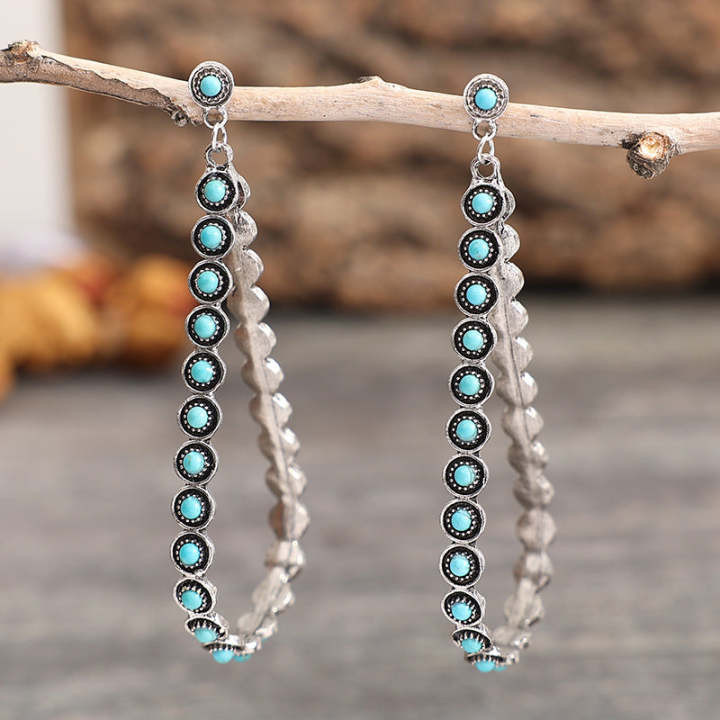
During the latest review, the product page displayed $127.26 USD and one visible, unlabeled color selection. The page presented turquoise, statement, and cross styling for everyday, Western-inspired, occasion, and gift contexts.
The visible listing did not clearly provide exact pair inventory, height, width, total drop, projection, per-earring mass, movement, attachment, backing, complete skin-contact and decorative components, finish, construction, turquoise disclosure, treatment, or care. Before purchase, ask the seller to map the chosen option to the correct gallery and answer each missing field.
The cross-shaped outline can create a distinct face-level direction, especially against plain hair or fabric. It can also interact with hair, open-knit clothing, a hat cord, collar points, or ear-protection bands. The shape alone cannot tell whether those interactions will occur. Use measurements and a complete outfit rehearsal.
What Works with the Cross Option
A Quiet Neckline
Try a simple crew neck, an open denim collar, or an uncluttered dark top. Omit the necklace at first. If the earrings remain clearly legible without making the face area feel crowded, add only a small secondary accent elsewhere.
A Distant Color Repeat
Repeat turquoise color at the ring or bracelet rather than immediately at the collar. Physical distance creates visual rhythm. The hand-level safety method in the turquoise Western ring styling-mistakes guide helps test any secondary ring.
A Personal Symbolism Check
A cross may carry religious, cultural, family, fashion, or no special meaning depending on the wearer. Confirm the intended interpretation rather than assigning one. This is especially important when the earrings are a gift.
What Does Not Work with the Cross Option
A second large cross necklace can turn a coherent motif into repetition without hierarchy. A high embroidered collar can compete with the earring outline. Loose hair may obscure the design or repeatedly catch it. None of these is an automatic failure, but each needs a side-view and movement test.
Do not solve a fit problem by changing only the outfit. If the earring is too heavy, insecure, irritating, or incompatible with the piercing, select another product. Styling cannot repair an unsuitable attachment or missing comfort information.
Product Check Two: Turquoise Western Statement Earrings
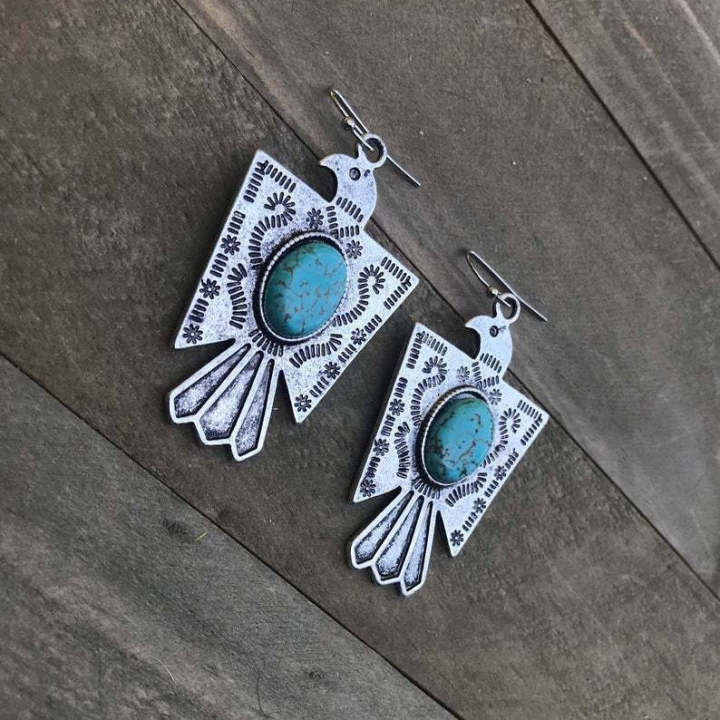
The second product page displayed $29.99 USD and one visible, unlabeled color selection during review. Its copy described Western statement earrings with turquoise, boho, and vintage-inspired styling, and later used the phrase “turquoise-style accents.” That wording supports a turquoise-colored styling discussion, not a claim of natural turquoise.
The visible page did not clearly state exact dimensions, total drop, projection, per-earring mass, attachment, backing, complete components, finish, construction, care, or option-specific return limitations. The apparent price difference between the two listings does not answer those questions and does not authenticate either product.
This option can be evaluated as a sculptural face-level accent. Compare its outline with hair, jawline, collar, hat, and glasses, but do not turn body or face categories into rigid rules. The wearer's preference and the actual full-outfit view are the final styling criteria.
What Works with the Western Statement Option
Build a denim-and-neutral formula: plain denim or chambray near the face, the earrings as primary, and warm brown, cream, black, or rust lower in the outfit. Choose one belt or bag hardware finish as support. Keep the nearest necklace absent or very quiet until the earrings have passed the complete rehearsal.
A dressier version can use a simple dark dress with one structured jacket and the earrings as the only large jewelry. The country-concert character can come from color, silhouette, or texture; it does not require every accessory to repeat the same motif.
What Does Not Work with the Western Statement Option
Exact turquoise matching across earrings, necklace, bracelet, ring, bag, and boots can look mechanical and can fail under changing light. Use one repeat at most, separated from the face. Screen images should not be treated as a color standard.
Too many active textures near the ears—fringe, open knits, sequins, hair accessories, hat cords, and embroidery—create snag and visual competition. Remove the texture that adds the least. If the earrings contact the remaining fabric or equipment, change the product rather than accepting repeated interference.
A Better Comparison Than “Which Looks More Cowgirl?”
| Field | Cross earrings | Western statement earrings |
|---|---|---|
| Visible role | Cross-shaped face focal point | Sculptural Western-inspired face focal point |
| Current displayed price | $127.26 USD | $29.99 USD |
| Current visible selection | One unlabeled color option | One unlabeled color option |
| Main styling question | Does the cross motif and outline suit the wearer? | Does the silhouette balance the upper outfit? |
| Main evidence gap | Mass, dimensions, attachment, components, finish, care | Mass, dimensions, attachment, components, finish, care |
Compare the same fields, not marketing intensity. A product is ready for a higher-confidence decision only when the shopper can identify the exact option, understand the unanswered questions, and judge the consequences if an answer is wrong.
Use the Adore Your Wardrobe Video as Optional Styling Input
The YouTube video “How To Wear Statement Earrings By Body Type” by Adore Your Wardrobe offers examples of statement-earring scale and outfit placement. It can prompt useful observations about proportion, visual emphasis, and how an earring interacts with the larger silhouette.
Treat body-type categories as optional creative prompts, not laws or value judgments. People with the same measurements can prefer different scale, balance, and expression. The video does not inspect, authenticate, measure, price, or endorse either Oroxen product, and it cannot establish materials, attachment, comfort, finish, care, or safety for a particular wearer.
What Works: A Six-Interaction Concert Test
- Hair: wear the planned style, turn the head, bend forward, and put on and remove the jacket slowly.
- Hat and hearing protection: test every band, cord, brim, and approved ear device without forcing contact.
- Phone: answer a call, take a photograph, scan a ticket, and check whether the phone touches the earring.
- Bag: lift the strap, open the closure, show the contents for security, and return the strap to position.
- Movement: walk, sit, stand, look over each shoulder, and make natural conversation gestures.
- Removal: move the earrings directly into a dedicated hard or structured case without setting them on an exposed surface.
The test should be gentle and cannot guarantee comfort over an entire event. Pain, pressure, insecure attachment, catching, skin reaction, or equipment interference is a stop signal.
What Does Not Work: Ignoring Venue and Transport Reality
The outfit must survive travel, entry, weather, crowds, restrooms, seating, and the return trip. Review current venue rules for bag size, prohibited items, weather exposure, accessibility, and re-entry. Use secure footwear and a bag that can be operated without bringing hardware near the earring.
Remove jewelry for any activity where it can catch, interfere with protective equipment, or reduce safe movement. Riding, animal handling, machinery, loading, heavy lifting, and some sports are different from standing in a concert audience. Follow qualified safety guidance for the actual activity.
What Works: Honest Material and Care Records
Record the product page, selected option, date, price, seller answers, and return terms. Ask what touches the skin, what is decorative, how the surface is finished, how the parts are joined, and which exposures must be avoided. A turquoise color or pattern does not identify a gemstone, and “vintage-inspired” does not establish age.
Without a complete construction record, avoid improvised cleaning. Perfume, cosmetics, sunscreen, alcohol, detergent, water, steam, ultrasonic equipment, dips, polishing compounds, and abrasives may affect components differently. Follow the exact seller instructions and store the pair separately. The uncertainty-first process in the women's turquoise jewelry care guide can organize observations without pretending unknown facts are known.
Frequently Asked Questions
Do cowgirl turquoise earrings need a matching necklace?
No. A statement pair often works better with an open or quiet neckline. Add a necklace only when it has a distinct supporting role and the upper outfit remains clear from several viewing distances.
Can price show which earring uses real turquoise?
No. Price can reflect many factors and is not material authentication. Request an option-specific disclosure and appropriate documentation when material identity affects the decision.
How should a beginner choose between the two pairs?
Define the motif preference, request dimensions and per-earring mass, confirm the attachment and components, review returns, and test the likely outline against the complete outfit. The general purchase checklist in What to Know Before Buying Turquoise Cowboy Jewelry helps compare evidence rather than mood.
Is a large earring suitable for every concert?
No. Venue conditions, crowds, hair, clothing, equipment, piercing comfort, and wearer preference change the decision. A smaller or different body-location accent may be more practical.
Can men wear the same styling direction?
Any wearer can choose an item when the design, symbolism, fit, piercing, and comfort suit them. The guide to turquoise jewelry for men at a country concert reinforces the same preference-and-evidence method.
Final What-Works Checklist
- One focal zone leads the outfit.
- The exact pair and current option are mapped to the correct gallery.
- Dimensions, mass, attachment, backing, components, finish, construction, care, and returns are confirmed or marked unknown.
- The motif is welcome to the wearer and no meaning has been assigned without permission.
- Hair, hat, hearing protection, collar, phone, jacket, bag, and movement have been rehearsed.
- A secure removal and storage case is ready.
- Material identity is not being inferred from price, title, color, photograph, or video.
Conclusion: Let Evidence Support the Look
What works is simple: a wearer-approved focal point, an exact option record, sufficient breathing room, a real-event rehearsal, and an honest plan for unresolved facts. What does not work is more revealing: automatic motif stacking, rigid body rules, color assumptions, untested comfort, and unsupported material stories.
Use the two earring listings as distinct candidates, not interchangeable examples. Ask the same specification questions, compare the consequences of every unknown, and keep the product that works with the wearer's actual evening. Continue exploring from the Oroxen homepage, but remember that the strongest country-concert style is the one that remains coherent, comfortable, and truthful after the first photograph is over.