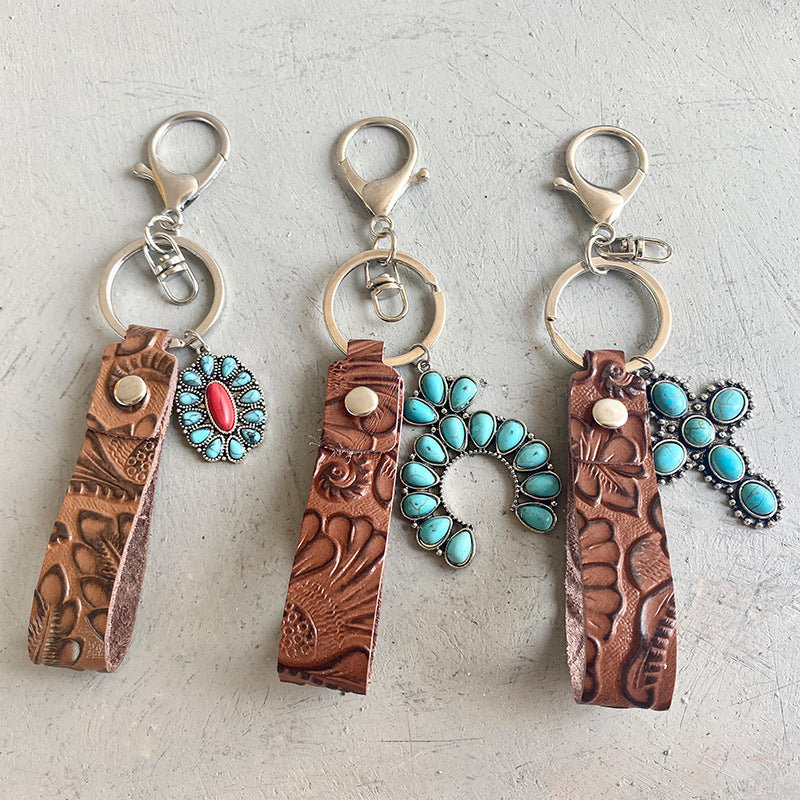
First-time buyers often ask one broad question—“Is this good turquoise Western jewelry?”—when the useful answer actually requires a series of smaller questions. What does the seller document? Which option is shown? How large is the piece? What touches the skin? What does the motif mean to the wearer? How will it move with clothing? What care instructions apply?
This FAQ turns those questions into an evidence ladder. Two current Oroxen necklaces provide examples: the Western Turquoise Vintage Floral Leather Necklace and the Western Turquoise Vintage Geometric Cross Necklace. Their names describe a Western, turquoise-style, vintage-inspired direction. They do not independently authenticate natural turquoise, leather, metal, age, maker, mine, origin, treatment, or cultural affiliation.
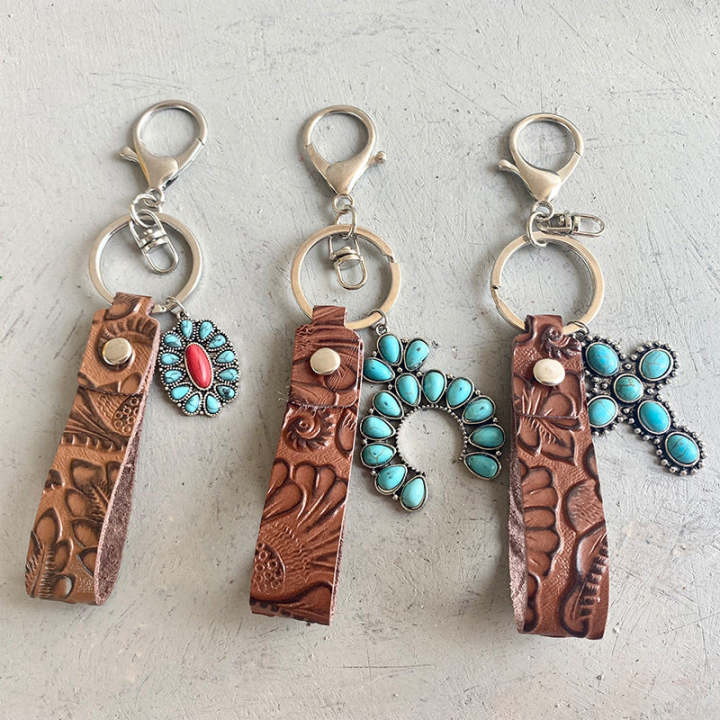
Quick Answer: Climb the Evidence Ladder
Begin with what is visible: title, selected option, photographs, and current description. Then request measurable facts: length, focal dimensions, weight, closure, components, finish, construction, and care. Next, test compatibility with the wearer's neckline, routine, symbols, and comfort. Finally, verify current availability, delivery, and return conditions before ordering.
Do not jump from color to composition or from style name to history. “Turquoise” in a title may describe color or design unless the page supplies a material statement. “Vintage” may describe appearance unless age and provenance are documented. “Leather” should be tied to a specified component and option before care decisions are made.
The public complete Western turquoise-style buying guide provides the larger framework. The questions below are designed for a first product comparison.
What Counts as a Verified Product Fact?
A verified fact is tied to the exact product and selected option through current seller disclosure, a measurement diagram, a written answer, packaging documentation, or qualified independent analysis. A photograph is evidence of visible appearance at the time it was made, not automatic proof of composition, scale, age, or origin.
| Claim | Useful evidence | What is not enough |
|---|---|---|
| Natural turquoise | Explicit option-specific material disclosure or qualified analysis | Blue-green color or product title alone |
| Metal composition | Exact component and alloy statement | Silver-colored appearance |
| Leather | Named component, composition, and option mapping | Word in a general title |
| Vintage age | Documented date and provenance | Distressed or antique-looking finish |
| Size | Numerical dimensions for selected option | Cropped or model photograph |
| Cultural or artisan origin | Specific maker and provenance record | Western, boho, Southwestern, or tribal-looking style |
When evidence is missing, use accurate visual language and ask. “Turquoise-colored focal detail” is more useful than an unsupported mineral claim because it keeps both styling and care decisions honest.
How Should a Beginner Read an Option Selector?
First identify the selector label, then read the option values. If a selector labeled “Size” contains Design 1 or Design 3, those values are design names rather than measurements. If it contains 52cm or 90cm, ask what the numbers measure and whether they apply to total length, wearable length, or another component.
Request an image-to-option map. Ask which photographs show the currently selected design, whether alternate images display other options, and whether specifications differ. Save the answer with the order record.
Never average facts across options. One photograph may clarify a focal shape while another shows a different closure or strap. Only the exact selected configuration should drive the decision.
How Can the Turquoise Jewelry Collection Help?
Use the Turquoise Jewelry collection for silhouette discovery, not authentication. Group current products by necklace, earring, bracelet, ring, set, vertical pendant, broad motif, and multi-component design. This reveals possible wardrobe roles.
Then narrow candidates with a fact card. Include product URL, option, visible motif, exact dimensions, weight, closure, components, finish, construction, care, availability, and current return terms. Mark every field confirmed, pending, or incompatible.
A collection can show variety while an individual page supplies the specific evidence. Do not transfer one product's material statement or care instructions to another product that looks similar.
What Does the Floral Necklace Page Establish?
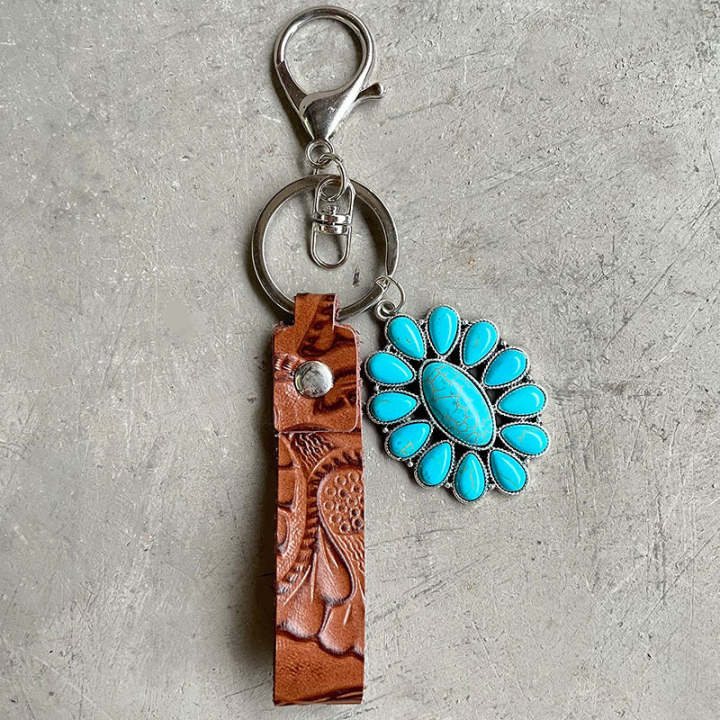
The current Western Turquoise Vintage Floral Leather Necklace page shows Design 1 through Design 5 under a selector labeled “Size.” Those values are design labels, not disclosed measurements. The visible page does not clearly map every image to each design or state total length, adjustment range, focal dimensions, profile, weight, closure, component composition, finish, construction, or care.
The title includes “Leather,” but the visible information does not clearly identify which exact component or design it covers. Ask whether the cord, strap, backing, or another part is leather, what the composition is, and which maintenance rules follow.
Who Might Prefer This Direction?
A wearer who repeatedly chooses floral ornament, broad Western styling, layered textures, or a visible necklace focal point may respond to the design. Verify scale with a life-size outline and compare it against the actual neckline, jacket, buttons, bag strap, and movement.
What Should Be Asked Before Ordering?
Request option mapping, total wearable length, adjustment range, complete focal height and width, profile, weight, closure, every skin-contact component, finish, assembly, care, and any option-specific difference. Ask whether the word “Leather” applies to the selected design and obtain the exact disclosure.
What Does the Geometric Cross Necklace Page Establish?
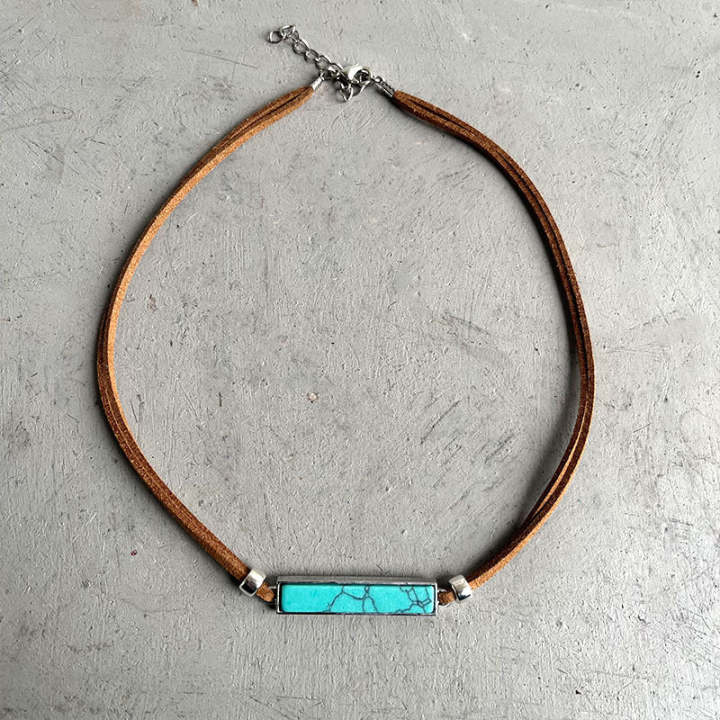
The current Western Turquoise Vintage Geometric Cross Necklace page shows Design 1, Design 3, and Design 4 beneath a selector labeled “Size.” These are visible design labels, not size measurements. Exact chain or cord length, adjustment range, cross dimensions, total drop, profile, weight, closure, components, finish, construction, and care are not clearly disclosed in the visible page information.
A cross has a recognizable vertical-and-horizontal outline and can hold personal or religious meaning. Confirm that the wearer wants the symbol and that it is suitable for the intended setting or gift. Do not present it as a neutral generic motif when meaning matters.
Who Might Prefer This Direction?
A wearer who actively chooses cross motifs, broad geometric pendants, or a single center-chest statement may prefer this route. Test the real placement against collar points, jacket lapels, seams, buttons, zippers, scarves, and seat belts.
What Should Be Asked Before Ordering?
Request the same fact set used for the floral necklace, plus complete cross height and width including attachment hardware. Ask whether the focal element is removable, how it connects, and which photograph belongs to every design.
How Should the Two Necklaces Be Compared?
Use identical criteria. Do not compare the floral necklace on visual detail while comparing the cross only on symbolism. Score both on option clarity, measurement completeness, weight, closure, components, care, neckline fit, movement, motif consent, and wardrobe reach.
Make two life-size paper outlines after measurements are obtained. Place each on three owned garments: one simple top, one collared or layered outfit, and one occasion look. Photograph standing, seated, walking, and with the usual bag. The better product is the one with stronger evidence and a clearer real-life role for that wearer.
Price and availability can change. Compare them at decision time without turning a temporary value into a permanent statement about quality.
Can “Boho Turquoise Jewelry” Be Used as a Description?
Boho is usually a broad style label rather than a material fact. It may suggest layered, relaxed, eclectic, or vintage-inspired visual relationships, but it does not prove maker, culture, origin, or production method.
Use the term when it helps a reader navigate aesthetics, then describe the observed shape, color, spacing, and outfit role. Avoid borrowing sacred, tribal, Indigenous, regional, or artisan claims without evidence and appropriate context.
What Should a Buyer Know About Care?
Care follows documented components and construction. A natural-stone routine should not be applied to an unidentified blue-green component. A leather conditioner should not be used because a title contains “Leather.” A metal polishing product should not be selected from a silver-colored appearance.
Ask what must stay dry, which products or chemicals should be avoided, how the necklace should be fastened and removed, and how each option should be stored. Keep pieces separated when contact could tangle, compress, or scratch them, following seller instructions.
The public fashion-finish care guide supplies a cautious process while material details are being confirmed.
What Can I Send the Seller in One Message?
A focused message reduces repeated exchanges and creates a written record. Name the exact product, selected design, and intended use, then ask the following:
- Which listed images show this exact design?
- What is the total wearable length and adjustment range?
- What are the focal element's maximum height, width, and profile?
- What is the complete product weight?
- What closure and attachment system are used?
- What is every cord, chain, focal, backing, and skin-contact component made from?
- What finish or coating applies to each relevant component?
- How are the focal pieces attached?
- Does the turquoise wording identify a material or only color and style?
- Does “vintage” describe age or appearance?
- If “Leather” appears, which component and option does it describe?
- What cleaning, moisture, cosmetic, storage, and friction rules apply?
- Is the pictured and described configuration currently available?
- Which current return terms apply if scale or fit is unsuitable?
Ask for numbers with units and option-specific answers. A response such as “standard size” or “good quality” does not resolve a measurement or component question. When the answer remains ambiguous, keep the field pending and choose whether the purchase can proceed without it.
How Useful Is the YouTube Video?
The supplemental source is Top 10 things to know about Turquoise by GEMDELUX. The currently available video is approximately 38 seconds long, and a transcript was not available during review. Treat it as a short prompt for further questions, not a complete buying course.
Watch the source in full and verify any terminology or material statement independently. The video does not document either Oroxen necklace. Never transfer a claim about another item's stone, mine, treatment, metal, maker, origin, age, or value to these products.
What Mistakes Do First-Time Buyers Make?
- Reading color as mineral identity. Ask for explicit option-specific composition.
- Reading Design labels as sizes. Obtain numerical measurements.
- Assuming every photograph shows the selected option. Request image mapping.
- Using “vintage” as a date. Treat it as appearance unless age is documented.
- Using one product's care for another. Follow exact components and construction.
- Ignoring motif consent. Confirm crosses and other symbols with the wearer.
- Testing only a flat outfit. Add movement, layers, bags, and normal routines.
Frequently Asked Questions
Is turquoise Western jewelry always made with natural turquoise?
No conclusion follows from the category name alone. Use explicit product documentation or qualified analysis for material identity.
What is the difference between Western and Southwestern turquoise jewelry?
Both can be broad merchandising or style terms. They do not establish tribal, regional, artisan, sacred, or historical provenance. Describe supported visual characteristics and source any cultural claim carefully.
Can a beginner buy a necklace as a gift?
Yes, after confirming motif preference, length, scale, weight, components, closure, care, and return terms. A guided choice is safer when those fields are unknown.
Should turquoise jewelry match the wearer's other blue-green pieces?
Exact matching is unnecessary. Coordinate through contrast, shape, apparent scale, or one repeated color family, and verify each product separately.
How can I tell which design fits a neckline?
Obtain dimensions for the exact design, make a life-size outline, and test it on the actual garment while standing, sitting, moving, and layering.
Where should a first-time buyer go next?
Use the public cowgirl turquoise-style FAQ for additional beginner questions, then return to current product pages for option-specific evidence.
Final Evidence-Ladder Checklist
- Record the current title, option, images, and description.
- Request image mapping and numerical measurements.
- Confirm weight, closure, components, finish, construction, and care.
- Check motif meaning and wearer preference.
- Make life-size outlines and run garment and movement tests.
- Verify current availability, delivery, and return conditions.
- Keep unsupported material, age, origin, and cultural claims out of the decision.
Explore more current options in Western Jewelry and return to Oroxen for current store and product information. Good questions turn turquoise Western jewelry from an impression into a documented, wearable choice.