A black dress gives a turquoise-colored ring unusually high contrast, but contrast alone does not create a finished outfit. The ring still needs a clear relationship with sleeves, bag, shoes, outerwear, other jewelry, and the movement of the hands. The easiest way to find that relationship is to build several distinct formulas rather than add a complete matching set.
The seven approaches below use two current Oroxen examples: the Turquoise Vintage Statement Cross Ring and the Turquoise Boho Vintage Ring. Product names describe visible style language. They do not independently prove turquoise composition, vintage age, metal content, origin, or craftsmanship. Verify fit, dimensions, materials, construction, and care for the exact option before purchase or wear.
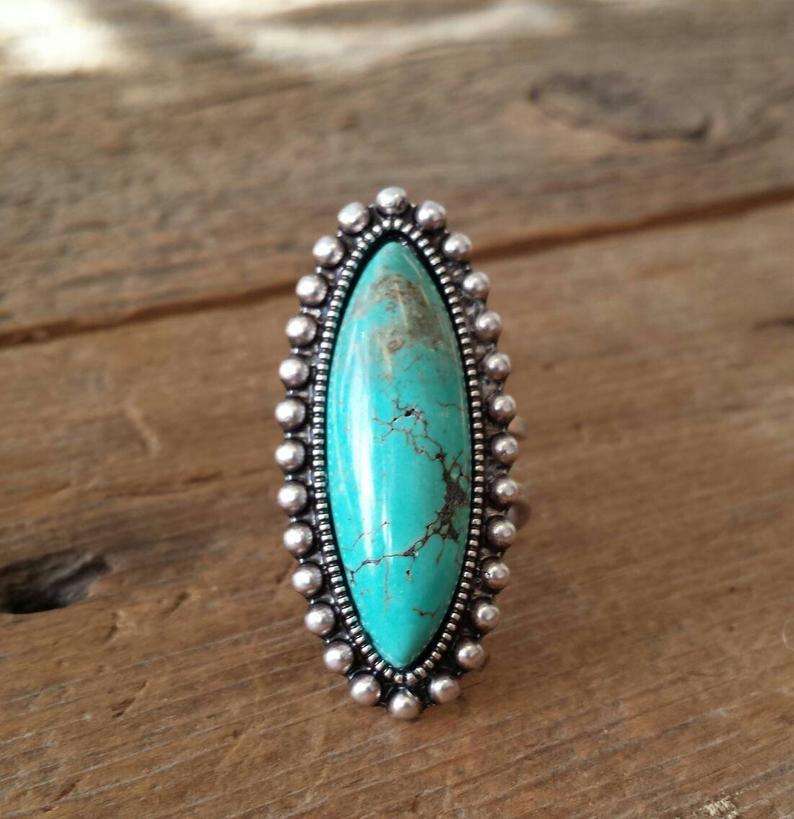
Before the Seven Looks: Create a Ring Baseline
Wear the black dress with no jewelry and take one full-body photograph. Mark the dress neckline, sleeve length, waist, fabric texture, hardware, and hem. Then place one verified ring on the intended finger and repeat the photograph with the hand resting naturally. This is the baseline against which every added accessory will be judged.
Measure the finger and record hand activity. The current statement cross ring page labels the size “Adjustable,” but it does not visibly state the starting measurement, approved range, or adjustment method. The boho ring page captured for this draft does not show a visible size selector. Neither condition proves universal fit. Ask for exact measurements and construction before ordering.
For a broader foundation, read the public Western Turquoise Ring Style, Fit & Care guide and compare current silhouettes in Western Rings.
Way 1: One Ring, Bare Wrist, Clean Neckline
This is the control look. Use one ring, no bracelet, small neutral earrings or none, simple shoes, and a bag with restrained hardware. It works especially well when the black dress has a clean neckline and matte fabric. The ring becomes the single point of cool color.
Choose the hand that appears naturally when holding the bag or resting at the side. Do not pose the hand against the dress simply to display the ring. Walk, sit, use the phone, and handle the bag. If the ring reads clearly in normal movement, the outfit needs no additional turquoise-colored accessory.
This formula is also the best first-wear test because other jewelry cannot hide fit or comfort problems. Record rotation, adjacent-finger contact, grip interference, and dress-fabric catching.
Way 2: Statement Ring With a Structured Clutch
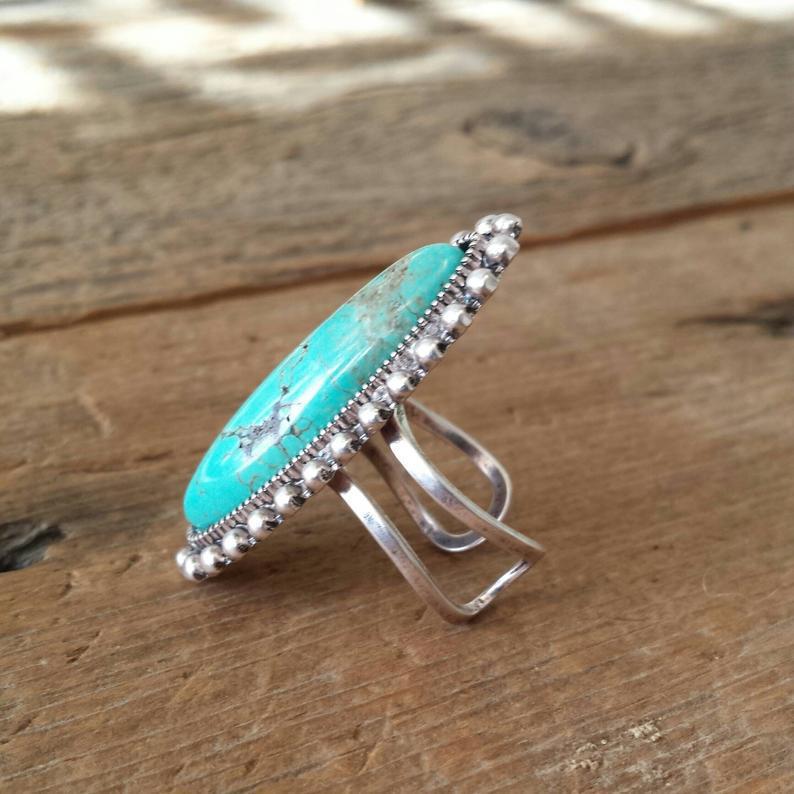
Place the statement cross ring on the hand opposite the clutch. The two strong shapes then balance across the body instead of crowding one side. Choose a clutch with simple geometry and limited hardware so it supports the ring without imitating the cross motif.
Test the ring while opening and closing the bag. A projecting face can strike a clasp or hard edge. If contact repeats, swap hands, change the bag, or use the lower-profile ring. The visual solution must survive physical handling.
Keep the neckline and wrist quiet. A small face-level accessory can prevent attention from dropping entirely to the hands, but it should not introduce another large motif.
Way 3: Boho Ring With Soft Texture
Use the Turquoise Boho Vintage Ring with a black dress in a softer fabric such as matte jersey, crepe, or an unstructured knit, then add one textured item: suede-like shoes, a woven bag, or a denim layer. Confirm real materials before naming them; visual texture alone is enough for the styling relationship.
The ring can support rather than lead. Allow the dress silhouette or bag texture to occupy the first visual position, while the turquoise-colored area becomes a hand-level discovery. Avoid adding several boho-coded accessories merely because the product name uses “boho.”
The captured boho ring page did not show an exact size option, face dimensions, band width, weight, materials, or care instructions. Obtain those details instead of inferring flexibility or fit from the photographs.
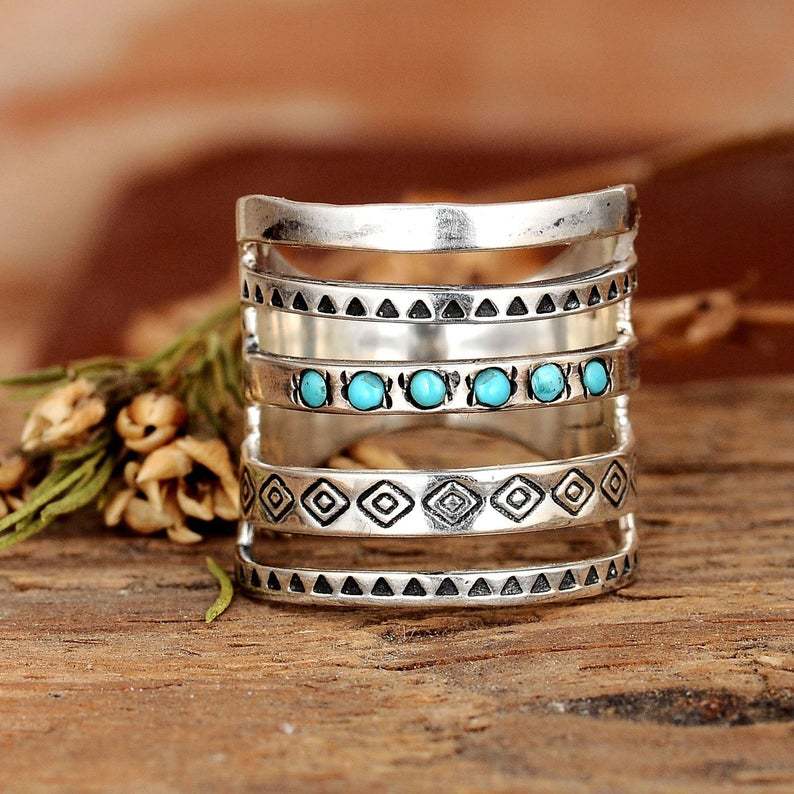
Way 4: Ring Plus One Opposite-Wrist Bracelet
Keep the ring hand bare at the wrist and add one narrow bracelet to the opposite side. This creates asymmetry without building a dense hand-and-wrist block. The bracelet may repeat apparent finish or geometry, but it does not need the same color or motif.
Photograph the outfit with arms at rest and during a natural gesture. If one side becomes visually heavier, reduce bracelet scale, move the bag, or choose quieter shoes. Test both items independently for fit and care.
Do not place a rigid bracelet beside the ring until same-side clearance has been tested. Repeated metal-to-metal or component contact can be uncomfortable and may damage some finishes.
Way 5: Ring With Denim Outerwear
Add a denim jacket or shirt over the black dress. The denim creates a second cool-colored field, linking the ring to the upper body without an exact turquoise match. Use a plain cuff if the ring should remain the hand focal point. A decorated sleeve may require fewer accessories.
Test jacket worn, open, carried, and removed. Check buttons, snaps, pocket edges, and heavy seams near the ring. A combination that works only while the jacket is motionless is not complete. The public Western jewelry with denim and dresses guide provides more outer-layer context.
Way 6: Ring With Western Boots as a Distant Echo
Use boots to anchor the lower silhouette, then keep belt and bag restrained. The ring and boots can connect through apparent finish, geometry, or Western styling without matching color. This creates distance between the two strongest accessory signals.
Decorated boots already demand attention. Pair them with the quieter ring or reduce face-level jewelry. Plain boots can support the statement cross ring more easily. Take a full-body photograph from normal viewing distance; hand close-ups cannot reveal the relationship with footwear.
Way 7: Two-Ring Composition With One Clear Leader
Only attempt a two-ring look after each ring has a verified fit and passes individual movement testing. Choose one as the leader and one as the support. Place them on different hands first to reduce neighboring-finger contact and create visual separation.
The supporting ring should differ in scale, coverage, or contrast. Two equally large motif faces can compete and interfere physically. Keep both wrists quiet, reduce bag hardware, and use simple earrings. Photograph hands at rest rather than arranging every motif toward the camera.
Make a gentle fist, type, use the phone, hold a cup, and handle the dress and bag. Remove the second ring if comfort or grip declines. More rings are not automatically a more successful look.
Choose the Right Way for the Dress Sleeve
| Sleeve state | Best starting formula | Main test |
|---|---|---|
| Sleeveless | Bare wrist or opposite-wrist bracelet | Hand-to-arm proportion |
| Short sleeve | Single ring with bag or boots | Balance between exposed arm and hand |
| Fitted long sleeve | One lower-profile ring | Fabric contact at wrist and hand |
| Voluminous sleeve | Ring-led minimal formula | Catching, coverage, and visual competition |
These are starting points, not universal rules. Actual sleeve openings, fabric, ring profile, and activity determine compatibility.
Build a Seven-Frame Contact Sheet
Photograph one full-body frame for each way using equal camera distance and similar light. Label the ring, hand, wrist, bag, shoe, outer layer, and comfort result. Do not score personal appearance. Score clarity, physical function, repeatability, and dress compatibility.
Select one everyday formula, one evening formula, and one layered formula. The remaining four become alternatives, not obligations. This turns seven ideas into a manageable rotation.
How to Use the Styling Video
The supplementary video is Wear It With Style: Turquoise Jewelry by JTV. Its page was accessible during drafting, but no transcript was available for review. This article does not quote the video or use it to verify the two Oroxen rings.
Watch the complete video and extract general questions about scale, color placement, and outfit hierarchy. Independently verify all material, treatment, origin, value, construction, and care claims. A third-party video cannot authenticate a specific product.
Fit Facts to Request Before Purchase
For both rings, request inner diameter or circumference, intended size range, band width and thickness, face height and width, profile, weight, materials, construction, and care. For the adjustable statement ring, ask for the approved range and exact adjustment method. For the boho ring, ask whether it is fixed or adjustable because the captured page did not show a visible size selector.
Measure the intended finger on the intended hand. Finger sizes can differ between hands and change with temperature or time. Never force a ring or repeatedly bend unknown construction.
Color and Material Language
Style by visible turquoise color without converting that appearance into an unsupported gemstone claim. Ask what the colored components are made from and whether treatments, coatings, composites, reconstructed material, or imitation components apply. Likewise, “vintage” may be style language rather than verified age.
If identification or collectible value matters materially, seek appropriate evidence. Price, photography, and a motif are not authentication methods.
Care After Each Formula
Remove rings before swimming, exercise, tools, harsh chemicals, and activities where impact or contamination is likely. Avoid soaking, steam, ultrasonic cleaning, chemical dips, abrasives, and polishing products until confirmed materials and instructions permit them.
Inspect the band, face, connections, settings, and surface after wear. Store rings separately in a dry, protected place so projecting motifs do not scratch other jewelry. Stop wear when irritation, looseness, distortion, or surface change appears.
Common Mistakes Across All Seven Ways
- Adding turquoise-colored accessories to every zone.
- Assuming adjustable means every finger.
- Styling from a close-up while ignoring the full dress and shoes.
- Repeating the cross motif in ring, necklace, earrings, belt, and bag.
- Ignoring sleeve, bag, and hardware contact.
- Calling a component genuine turquoise without evidence.
- Using generic cleaning advice on unconfirmed construction.
Run a Gesture Choreography Score
A ring is a moving accessory, so evaluate each of the seven formulas through the same short sequence. Stand with both arms relaxed for five seconds. Lift the normal bag, take out the phone, place one hand near the waist, sit, rise, and put on the intended outer layer. Film the sequence from full-body distance if privacy and surroundings permit.
Give each formula four separate scores from zero to two. Visibility receives zero when the ring never performs its assigned role, one when it appears intermittently, and two when it appears at the intended moments. Comfort receives zero for pain or interference, one for noticeable but acceptable contact, and two for unremarkable wear. Coherence measures whether the ring connects with the entire dress rather than only the hand. Repeatability asks whether the wearer would recreate the look without studying a photograph.
Discard any formula with a zero in comfort, regardless of the total. Among the rest, keep the highest everyday score and the highest occasion score. The winning looks may use the same ring differently: the boho ring could support textured daytime shoes, while the cross ring could lead an evening clutch arrangement. A lower-scoring formula is not a failure; it reveals which accessory relationship is unnecessary.
Repeat the choreography after thirty minutes of permitted indoor wear. Rotation, sleeve contact, grip fatigue, or frequent adjustment may appear later than the first photograph. Record the change instead of relying on memory. This small scoring exercise makes the seven options comparable without pretending personal style can be reduced to one universal number.
Complete the Seven Ways Without Buying Seven New Accessories
Use only items already owned for the first contact sheet. The variable can be hand placement, bare versus opposite wrist, bag side, denim layer, boot emphasis, or second ring. If a formula requires a new purchase, leave that frame blank for one week. An empty frame tests whether the perceived gap remains after the excitement of planning fades.
When the gap persists, describe it functionally: “small opposite-wrist balance that clears the sleeve,” not “another turquoise bracelet.” Functional language widens the options and prevents accidental duplication. Browse only after the function is clear, and compare each candidate against the verified measurements and care burden of the rings already selected.
Frequently Asked Questions
Which of the seven ways is easiest for a beginner?
Start with one ring, bare wrist, clean neckline, and simple bag. It provides the clearest fit and visual baseline.
Can both example rings be worn together?
Possibly, after each exact ring fits and passes individual testing. Use one leader, separate hands initially, and keep wrists quiet.
Does black match every turquoise color?
Black provides contrast, but fabric texture, lighting, ring scale, and other accessories still affect the result. Exact color matching is unnecessary.
Where should a reader compare more jewelry?
Browse Western Rings, the broader Western Jewelry collection, visit the Turquoise Jewelry Guides hub, read the public Cowgirl Jewelry Style Guide, or return to the Oroxen home page.
Final Seven-Way Rule
Change one relationship at a time: wrist, bag, texture, outerwear, boots, or second ring. Keep the dress and main ring constant long enough to understand what the change accomplishes. Fit and movement must pass before visual preference becomes the final decision.
Seven ways do not require seven purchases. One verified turquoise-colored ring, one black dress, and a disciplined edit can create several distinct outcomes from accessories already owned.